
 EN
EN
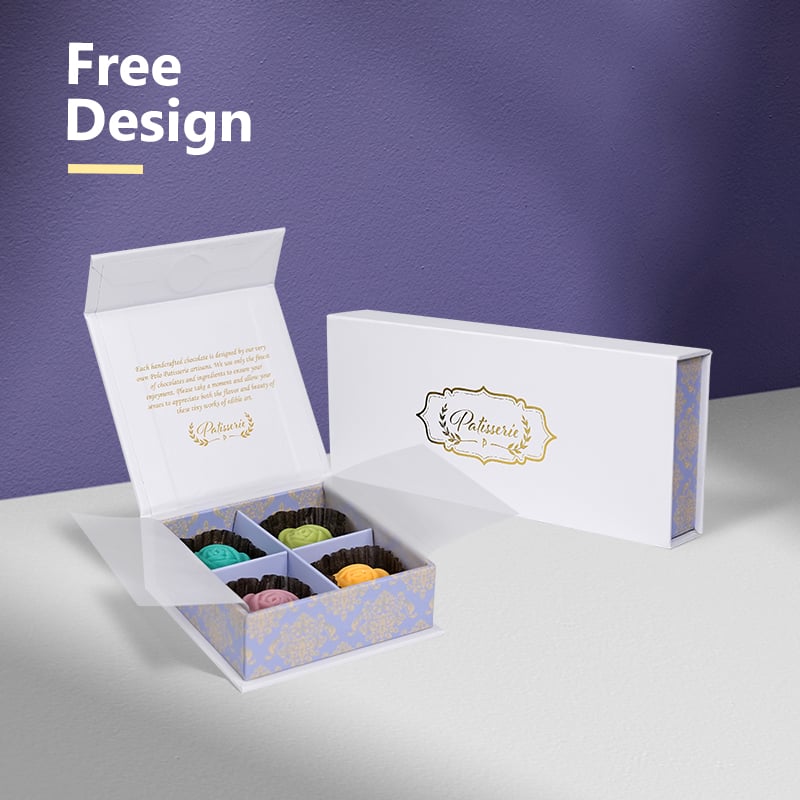
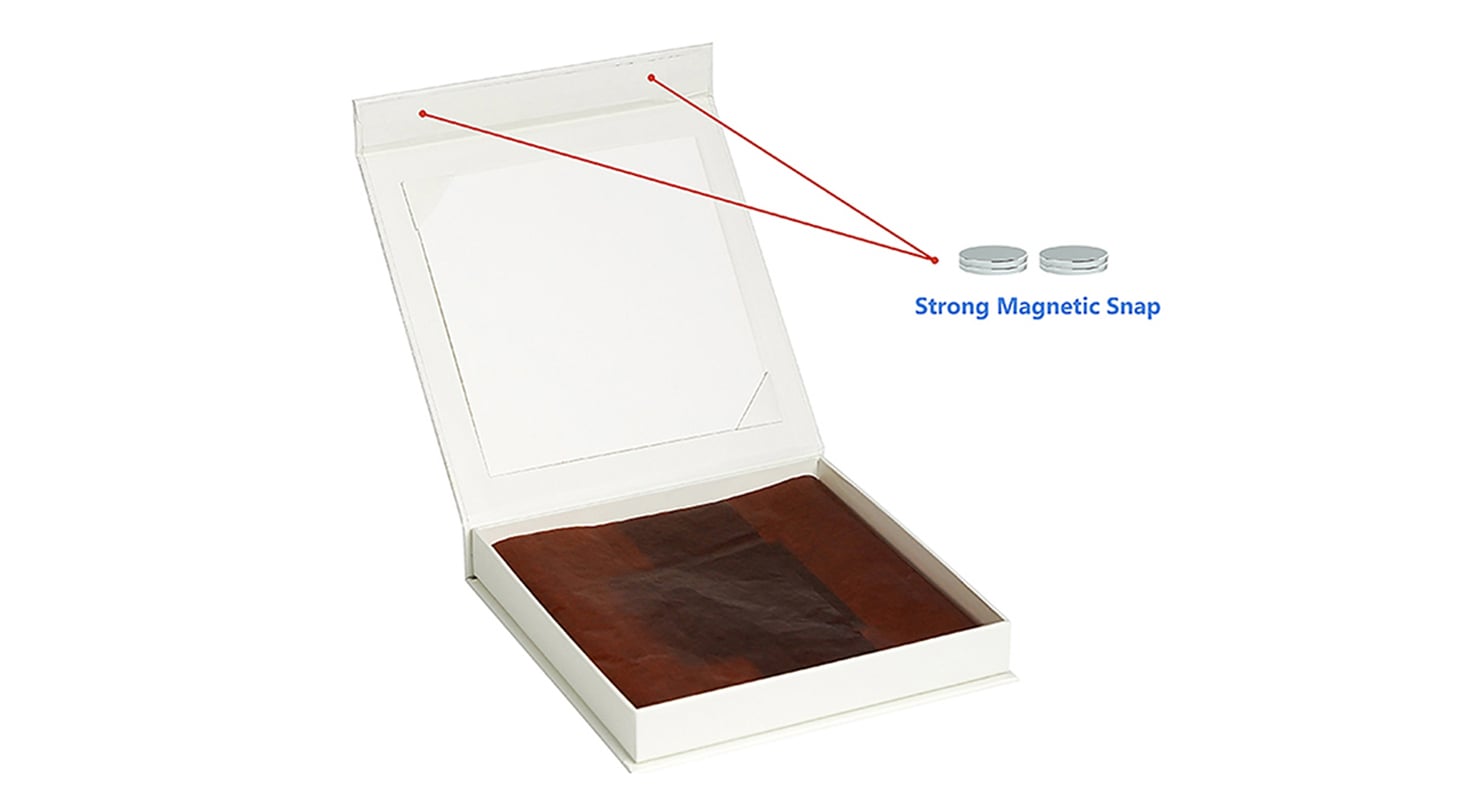
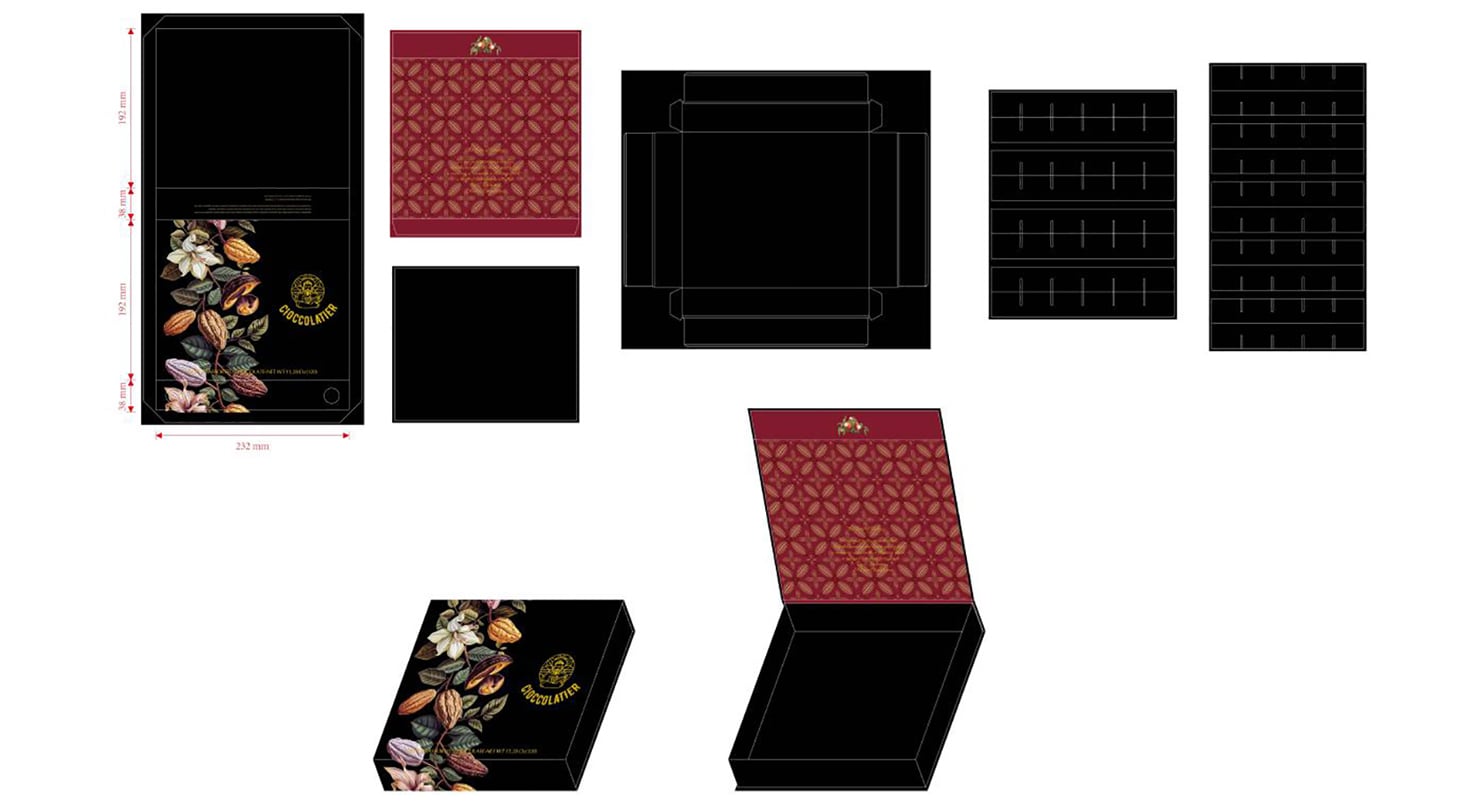
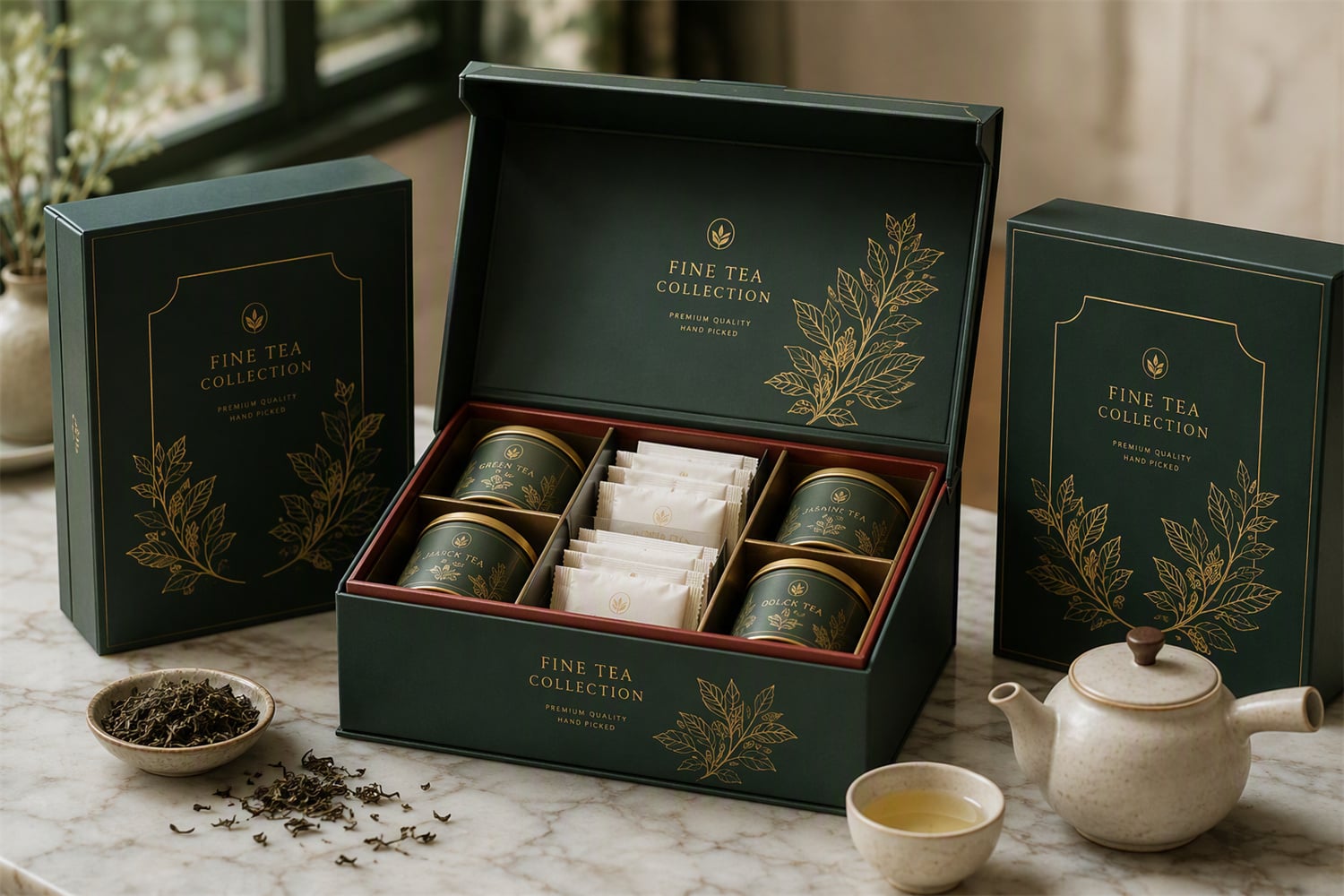
Premium custom tea boxes in deep green and gold with divided interiors (Cygedin)
Tea is the second most consumed beverage in the world, and it has quietly become one of the most gift-worthy products on retail shelves. Loose leaf tea, artisan blends and wellness infusions now sit in premium packaging across supermarkets, boutique shops and e-commerce stores - and the box has become part of the product itself. In 2026, shoppers increasingly choose tea based on how it is presented, which makes custom tea boxes a decisive investment for tea brands, distributors and private label start-ups alike.
At Cygedin, a custom packaging manufacturer in Shenzhen, China, we produce paper box packaging for tea and food brands in North America, Europe and beyond. In this guide we explain how to design tea packaging that protects freshness, communicates quality and sells the ritual - from the rigid box structures tea brands favour, to the interior layouts that hold tea tins and sachets securely, to the finishing that makes a seasonal tea gift box impossible to put down.
Why Custom Tea Boxes Matter for Tea Brands in 2026
The tea category has split into two retail lanes. On one side, everyday bagged tea competes on price and convenience. On the other, specialty tea - single origin, organic, wellness blends and seasonal collections - competes on experience and story. Premium tea commands dramatically higher prices when it arrives in a rigid gift box that looks and feels deliberate, which is why specialty tea brands invest in packaging before they invest in advertising.
Custom tea boxes also carry practical jobs. A well-designed tea box keeps tea tins upright, prevents sachets from crushing, blocks light and manages humidity with the right liner choices. For retailers, a structured tea box with a custom logo turns shelf space into brand space, and for e-commerce sellers it protects the product through the final mile and creates the unboxing moment customers photograph and share.
Seasonality adds urgency. Tea is a natural gift at Thanksgiving, Christmas and Lunar New Year, and tea samplers sell strongly in autumn when consumers switch back to hot drinks. Brands that order custom tea packaging in September secure production slots before the holiday rush.
Inside the Box: Tea Tins, Sachets and Divided Gift Box Layouts
Tea formats dictate interior design. Loose leaf tea is most often sold in tins, which are heavy, rigid and need snug compartments so they do not collide in transit. Pyramid sachets and teabags are lighter but crush easily, so they suit flat trays, lift-out inserts or layered layouts. Powder blends such as matcha need moisture-protective pouches inside the box.
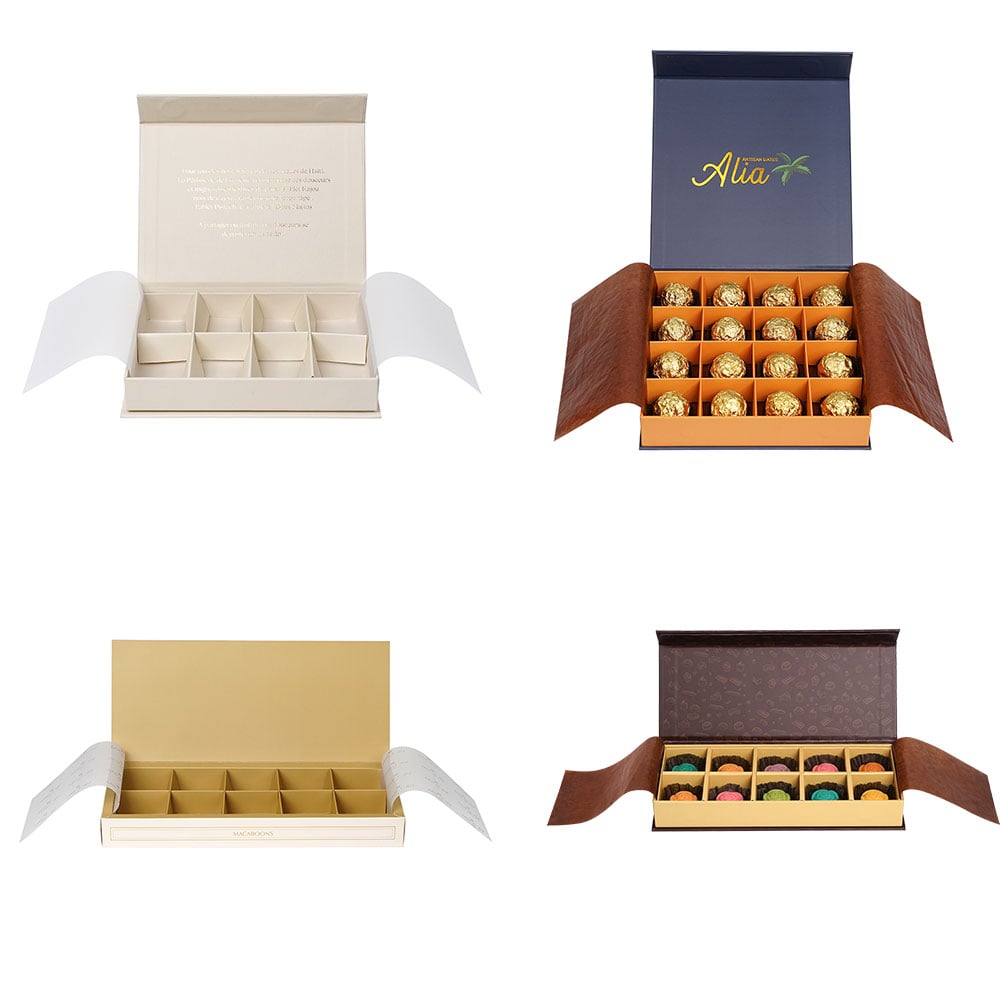
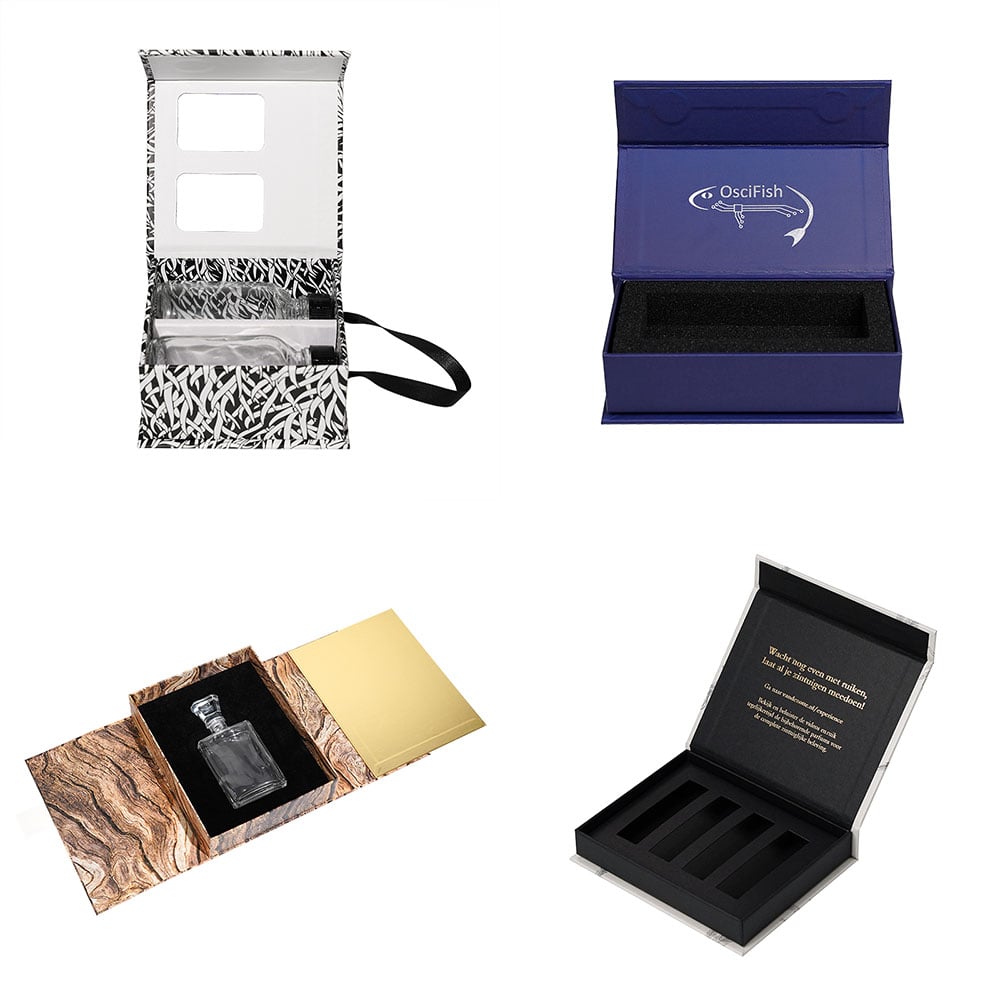
A divided tea gift box with custom die-cut inserts is the most versatile solution. Cardboard dividers create separate cells for each tea variety, printed inserts can carry tasting notes and brewing instructions, and a lift-out tray reveals a second layer underneath - a structure that turns a modest box into a generous-feeling present. Window panels are less common in premium tea packaging than in bakery packaging, because tea benefits from light protection, but a small window on the sleeve can still tease the tins inside.
The interior should be engineered around your actual product dimensions. Sharing your product sizes with the packaging manufacturer early lets the design team propose tray layouts and insert structures that prevent movement and present every tea variety at its best angle.
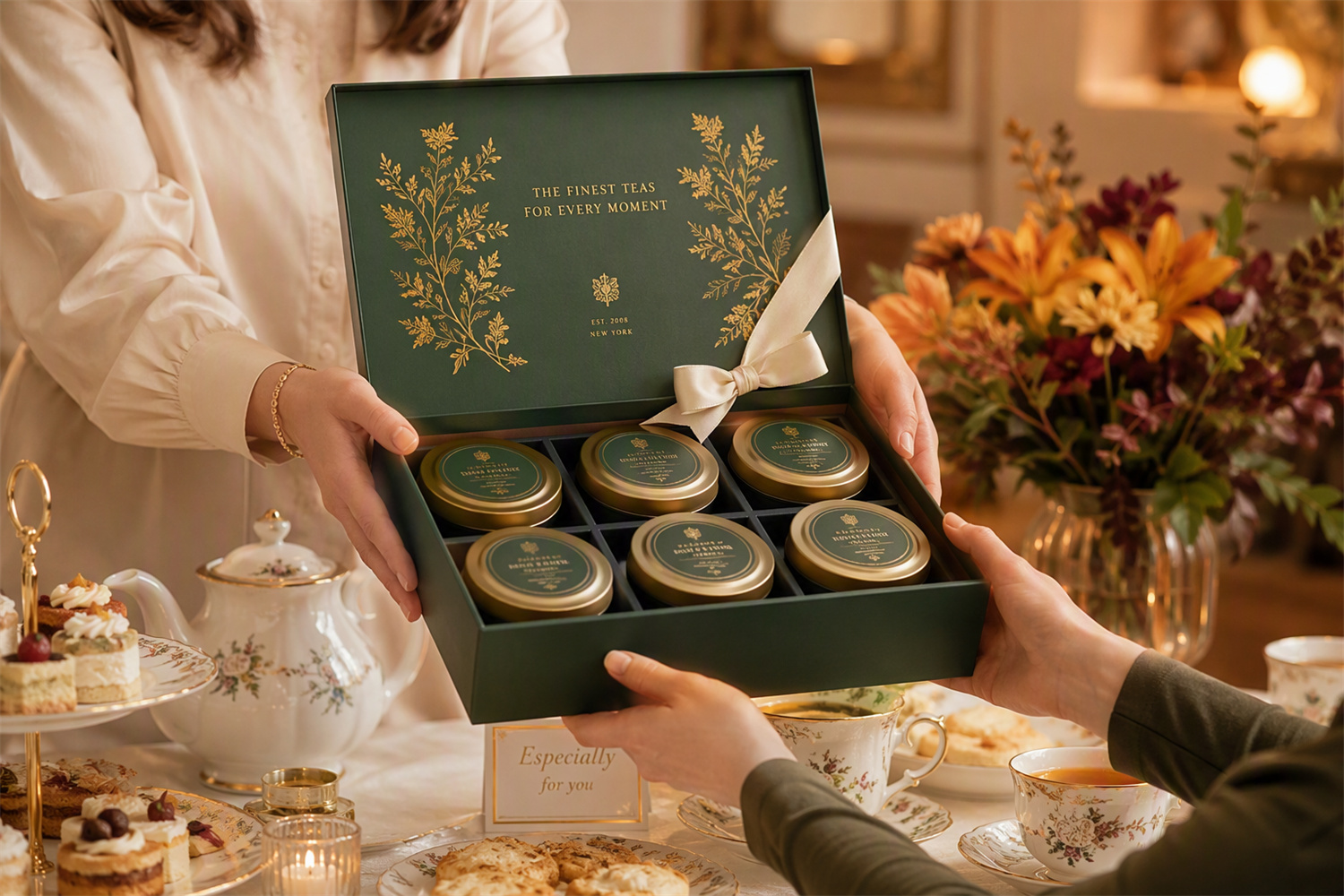
Afternoon-tea gifting scene with a custom tea gift box
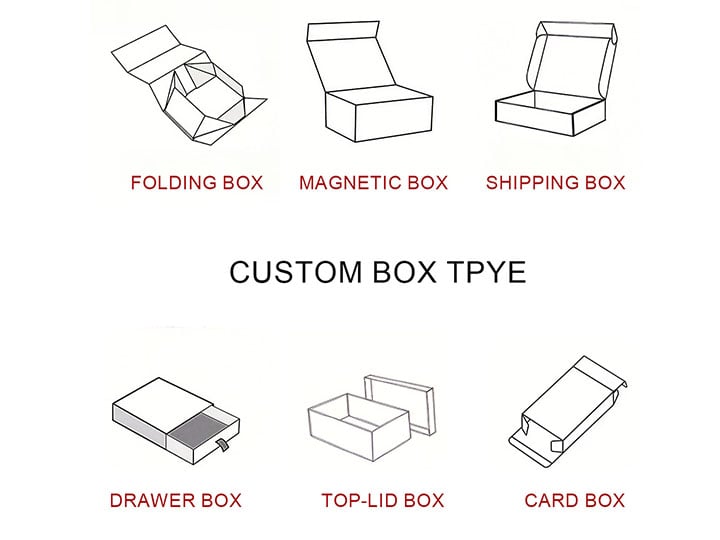
Choosing the Right Structure: Shoulder Boxes, Lid and Base Boxes and Drawer Boxes
Structure choice is the single most important packaging decision for tea, because it determines how the box feels to open. The premium favourite is the shoulder box - a two-piece rigid structure in which the lower part carries a raised inner collar, or neck, and the lid slides over it until its rim rests on the shoulder. Because the lid sits flush with the base, a shoulder box looks like a solid block on the shelf, and the precision fit gives the satisfying friction-assisted opening that tea drinkers associate with quality. Shoulder boxes are also called neck boxes in some markets.
A lid and base box is the more familiar two-piece alternative: a straight-sided base with a slightly larger telescoping lid. It is easier to produce in a wider range of dimensions and remains the workhorse for tea gift sets sold through retail and e-commerce. For brands that want a more interactive reveal, a drawer box slides open from the side and photographs beautifully, though it generally suits lighter contents such as sachets and small accessories rather than heavy stacked tins.
All three structures can be made as rigid boxes with 1.5-3 mm greyboard walls, which is the material tea buyers expect for premium tea packaging. Rigid construction protects the contents, holds its shape after repeated opening, and gives the box enough weight that it can be reused as a keepsake storage tin - a behaviour tea brands deliberately encourage, because a box that lives on a kitchen counter is advertising that lasts for months.
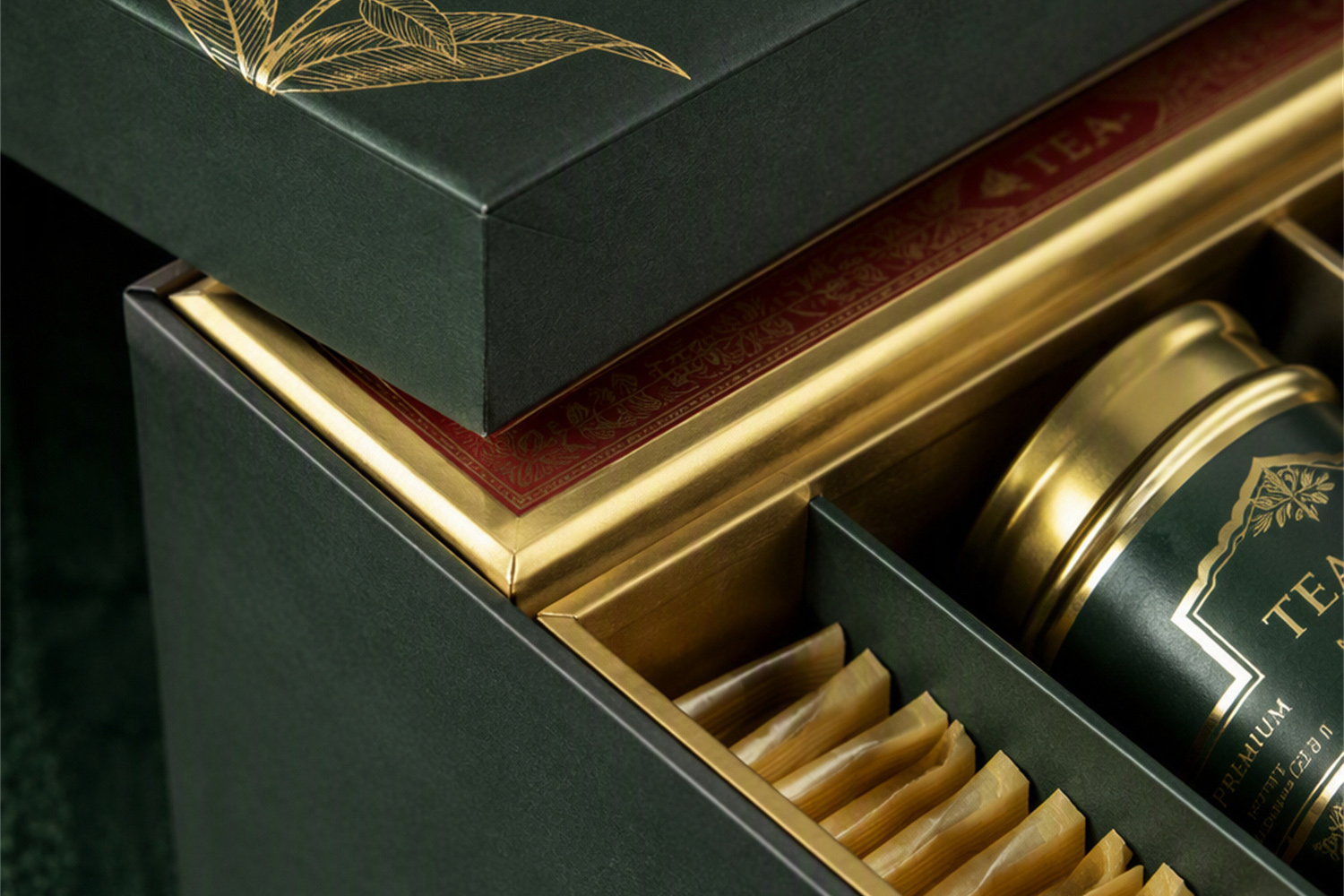
Close-up of shoulder box structure with divided tea interior
Materials and Interiors: Food-Safe Liners and Freshness Protection
Tea is sensitive to light, oxygen, moisture and odour, so materials matter beyond appearance. The outer shell of a rigid tea box is typically wrapped in art paper or specialty paper over greyboard, but any surface that can contact food - or sit inside a pouch that touches tea - must use food-grade materials and approved inks. Where tea is packed directly into a box compartment, an inner liner or food-safe pouch creates the necessary barrier.
For multi-compartment tea gift boxes, dividers and trays are usually made from stiff card or thin corrugated board, finished in brand colours. Velvet or flocked linings are popular for very high-end tea collections, while kraft or natural-finish interiors support an organic or sustainable brand story.
Sustainability claims must be earned. Cygedin offers recycled and FSC-certified paper options with soy-based inks, so tea brands can state recyclability honestly on the pack. Because tea boxes are often kept and reused, choosing durable, recyclable materials reinforces the brand twice: at first opening and at the end of the box's life.
Finishing and Branding: Foil Stamping, Custom Logos and Seasonal Artwork
Tea packaging is a canvas for tactile storytelling. Foil stamping in gold, copper or rose gold is the classic upgrade for tea gift boxes - a foil-stamped custom logo or botanical motif catches light on the shelf and signals premium pricing instantly. Matte lamination or soft-touch coating gives the box a refined, velvety feel that pairs with deep greens, charcoal and cream palettes common in the tea category.
Embossing and debossing add dimension to logos and tea-leaf line art, while spot UV can make selected elements gleam against a matte background. Inside, printed inserts in brand colours carry tasting notes, steeping guides and a QR code linking to brewing videos or a loyalty page - small details that extend the brand experience after the lid comes off.
Seasonal artwork deserves a plan. Tea brands that sell autumn, holiday and spring collections often keep one permanent box structure - a shoulder box or lid and base box - and change only the printed artwork and foil colour between seasons. This keeps tooling costs predictable while keeping shelf presence fresh, and it is the most efficient way for a tea brand to build a packaging system rather than a series of one-off boxes.
Planning Your Tea Packaging Timeline with Cygedin
A dependable tea packaging launch runs backwards from your selling season. For autumn and holiday tea gift boxes, we recommend freezing artwork in September, approving a physical sample in early October, and completing mass production in four to six weeks so sea freight to North America or Europe lands with a comfortable buffer before the first holiday promotion.
Sampling is where quality is decided. Cygedin sends a pre-production sample built from the exact materials, printing and finishing of the final order, so what you approve is what ships. Our production process shares in-process QC photos and videos at each stage and finishes with a 100 percent inspection, giving tea brands the confidence to sell against hard retail and e-commerce dates.
Whether you need 1,000 units for a boutique sampler or a full container for national retail distribution, our factory produces rigid boxes, shoulder boxes, lid and base boxes, drawer boxes and folding cartons under one roof. Tell us your tea formats, target quantity and markets, and our engineers will recommend the structure, interior layout and finishing that fit your brand and your seasonal budget.
Frequently Asked Questions
What is the best box structure for premium tea?
For premium tea collections, a rigid shoulder box is the most common choice because its raised inner collar lets the lid sit flush, creating a solid, high-end feel with a satisfying friction-assisted open. Lid and base boxes and drawer boxes are strong alternatives for different reveal experiences and content weights.
Can Cygedin produce food-safe packaging for direct tea contact?
Yes. We offer food-grade materials, approved inks and protective inner liners for compartments and pouches that contact tea, and we provide material documentation on request so your packaging claims are verifiable.
Can I keep the same box structure and change artwork for holidays?
Absolutely. Many tea brands maintain one rigid structure such as a shoulder box and rotate printed artwork and foil colours for autumn, holiday and spring collections. This keeps tooling stable while renewing shelf presence every season.
What is the typical lead time for custom tea boxes?
Samples are ready in 5-7 business days and mass production typically takes 4-6 weeks depending on quantity and finishing. Ordering in September secures capacity before the holiday rush and leaves room for sea freight to reach your market in time.
Conclusion: Build Your Tea Packaging Around the Ritual
Tea is bought with the eyes before it is tasted, and custom tea boxes are how a brand wins that first moment. The right structure - a shoulder box, a lid and base box or a drawer box - combined with food-safe materials, considered interiors and confident finishing turns tea tins and sachets into a gift people remember and a shelf presence retailers reorder.
If you are launching a tea line, upgrading your current tea packaging or planning an autumn or holiday tea gift box, Cygedin can take your idea from artwork to delivered container.
Contact Cygedin today for custom tea box pricing and free design consultation for your tea and gift collections.